
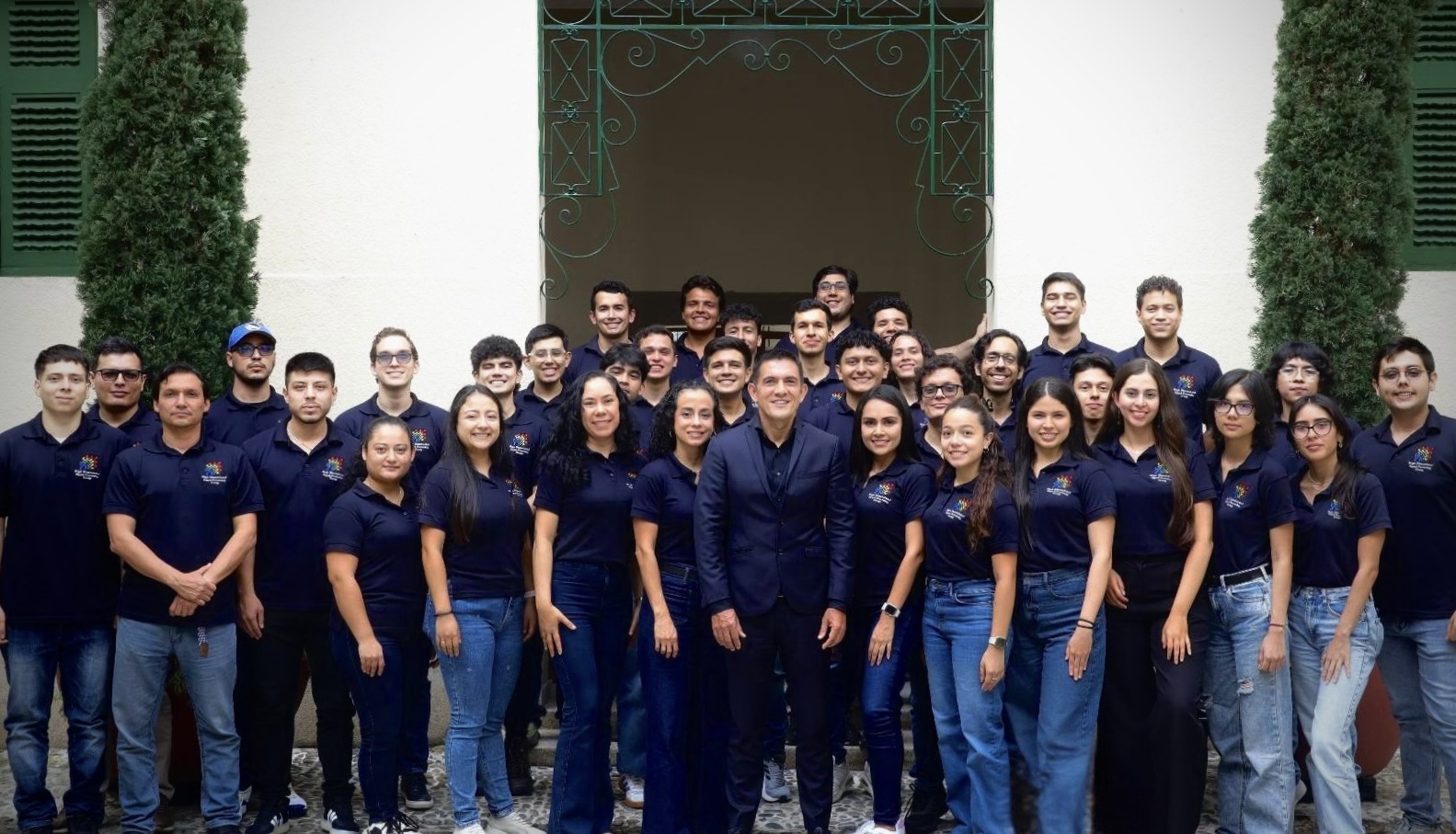
About us
High Dimensional
Signal Processing
Research Group
From Colombia to the world, HDSP advances artificial intelligence, inverse problems, and computational optics to transform complex data into scientific discovery and high-impact innovation.
HDSP at a glance
What drives the group
Research mission and infrastructure
The HDSP Research Group in Algorithm Design and Multidimensional Data Processing, led by Prof. Henry Arguello, conducts internationally oriented research in artificial intelligence, inverse problems, and computational optics. Its work integrates advanced mathematics, null-space modeling, coded optics, and AI agents to design algorithms capable of recovering information from incomplete, noisy, or indirect measurements.
These advances impact geophysics, communications, health, and precision agriculture, advancing cutting-edge technology from Colombia with global reach to address scientific challenges with human benefit.
Interdisciplinary research
HDSP connects signal processing, imaging, optimization, and artificial intelligence to address complex scientific problems.
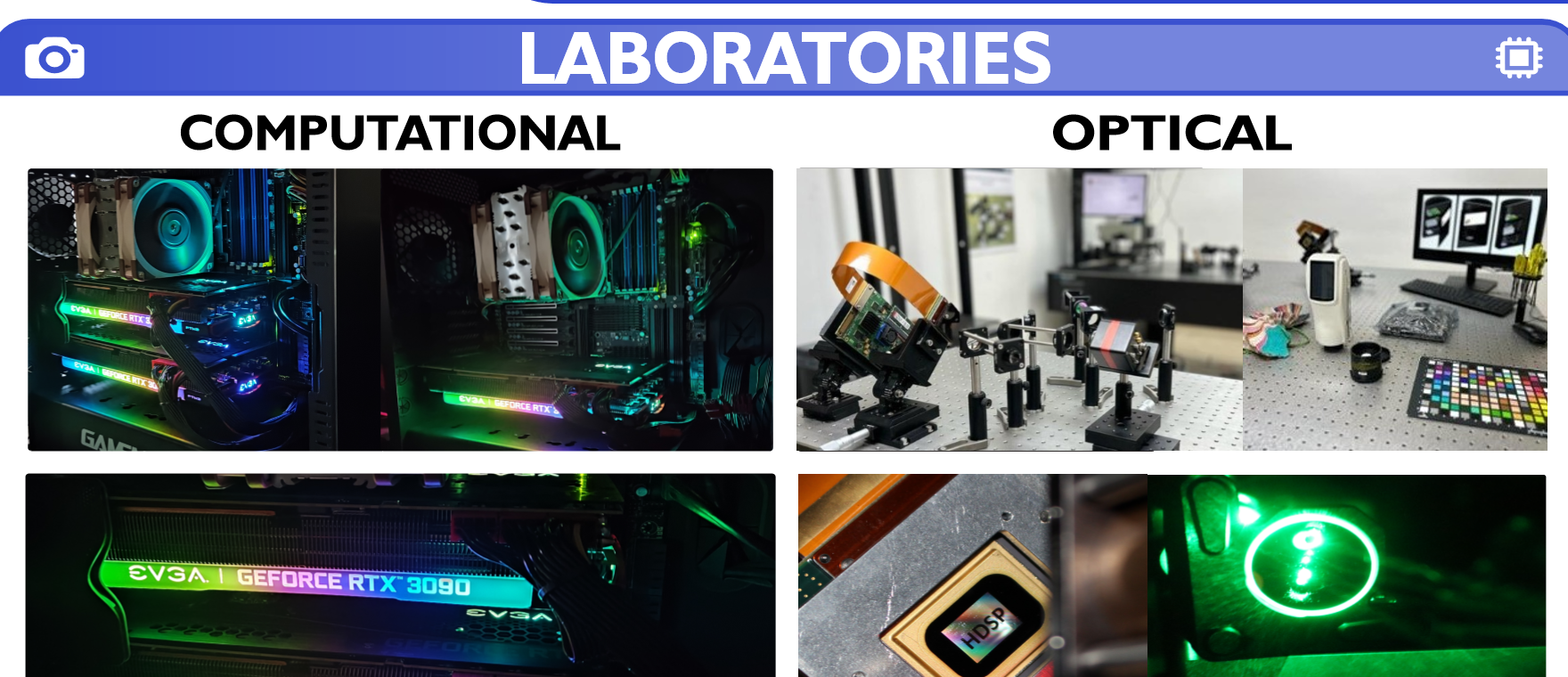
State-of-the-art laboratories
The group operates modern computational and optical laboratories that support research, academic production, and new projects.
Impact-oriented work
Its research is designed to create value for Colombian society while maintaining strong international scientific relevance.
What we study
Research areas
Artificial Intelligence is the group's largest research axis and connects the rest of the areas through learning-based models, optimization, physics-aware reasoning, and high-dimensional data analysis.
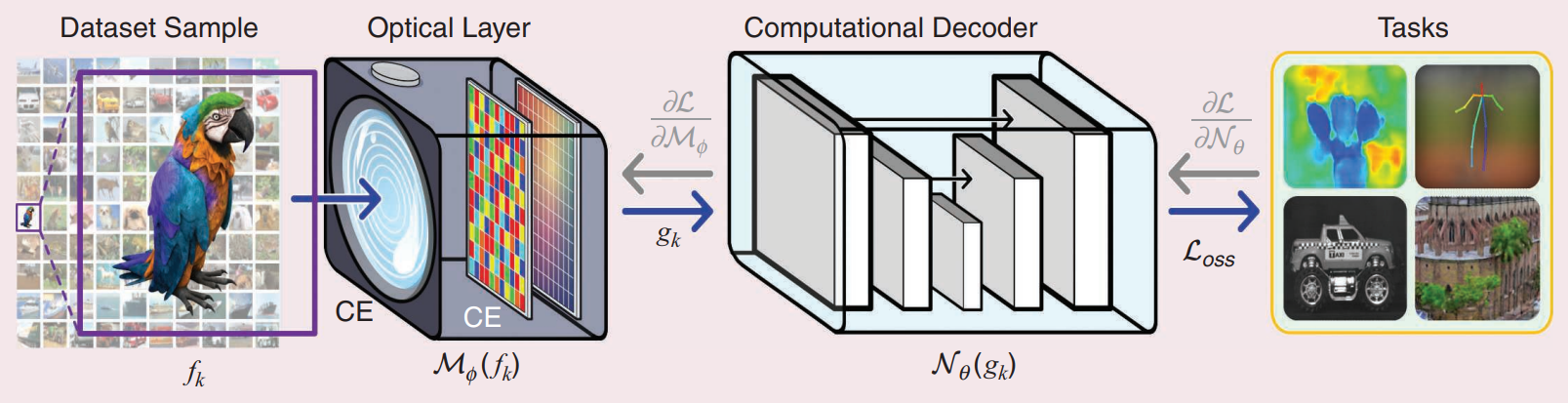
Artificial Intelligence combines numerical optimization, machine learning, data processing, and physical-mathematical principles to extract patterns, make inferences, and support decision-making in complex real-world problems. Beyond purely data-driven approaches, this line develops AI schemes that incorporate physical, mathematical, and structural relationships from the phenomena under study, enabling more interpretable, robust, and adaptable models for limited, noisy, or heterogeneous data. It focuses on fundamental methods for multimodal data analysis and high-level information extraction, with applications in computational optics, geophysical imaging, remote sensing, medical imaging, and related areas.
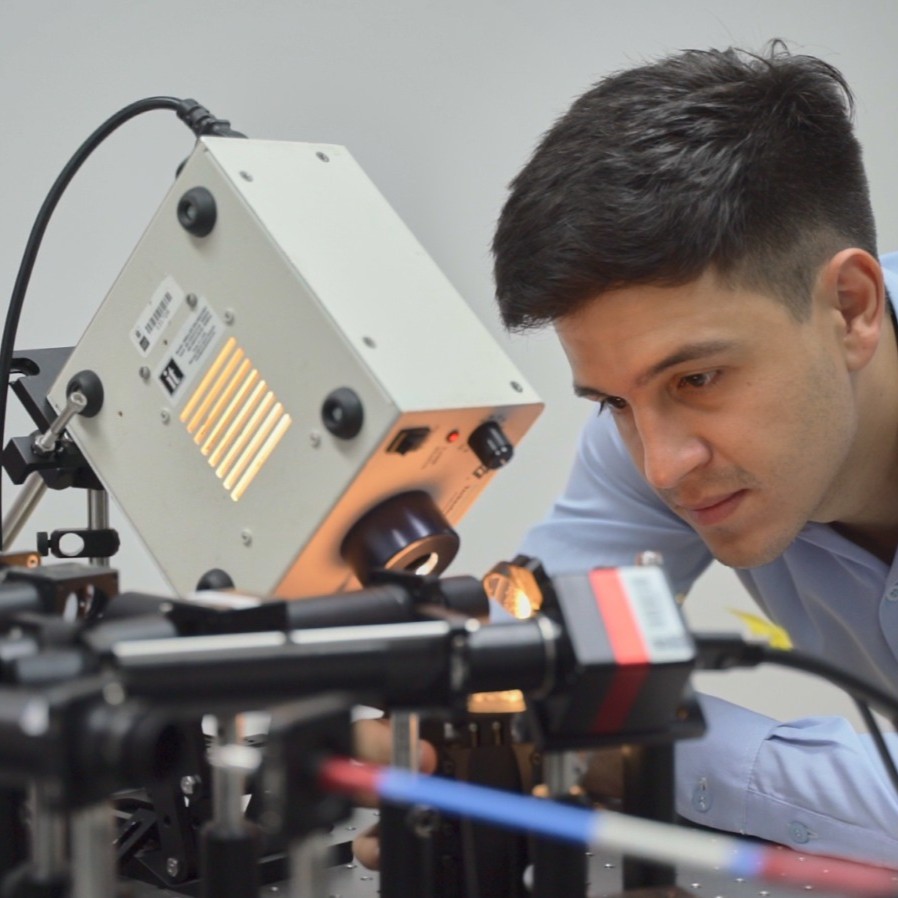
Spectral Imaging combines optical design, data acquisition, signal processing, and computational algorithms to capture and interpret visual information beyond conventional intensity and color. These systems measure scene responses across multiple wavelengths, revealing physical, chemical, and material properties that standard images cannot observe. This line addresses the design, implementation, and characterization of optical and computational systems for spectral data acquisition, supporting high-level tasks such as classification, detection, identification, and material or object characterization.
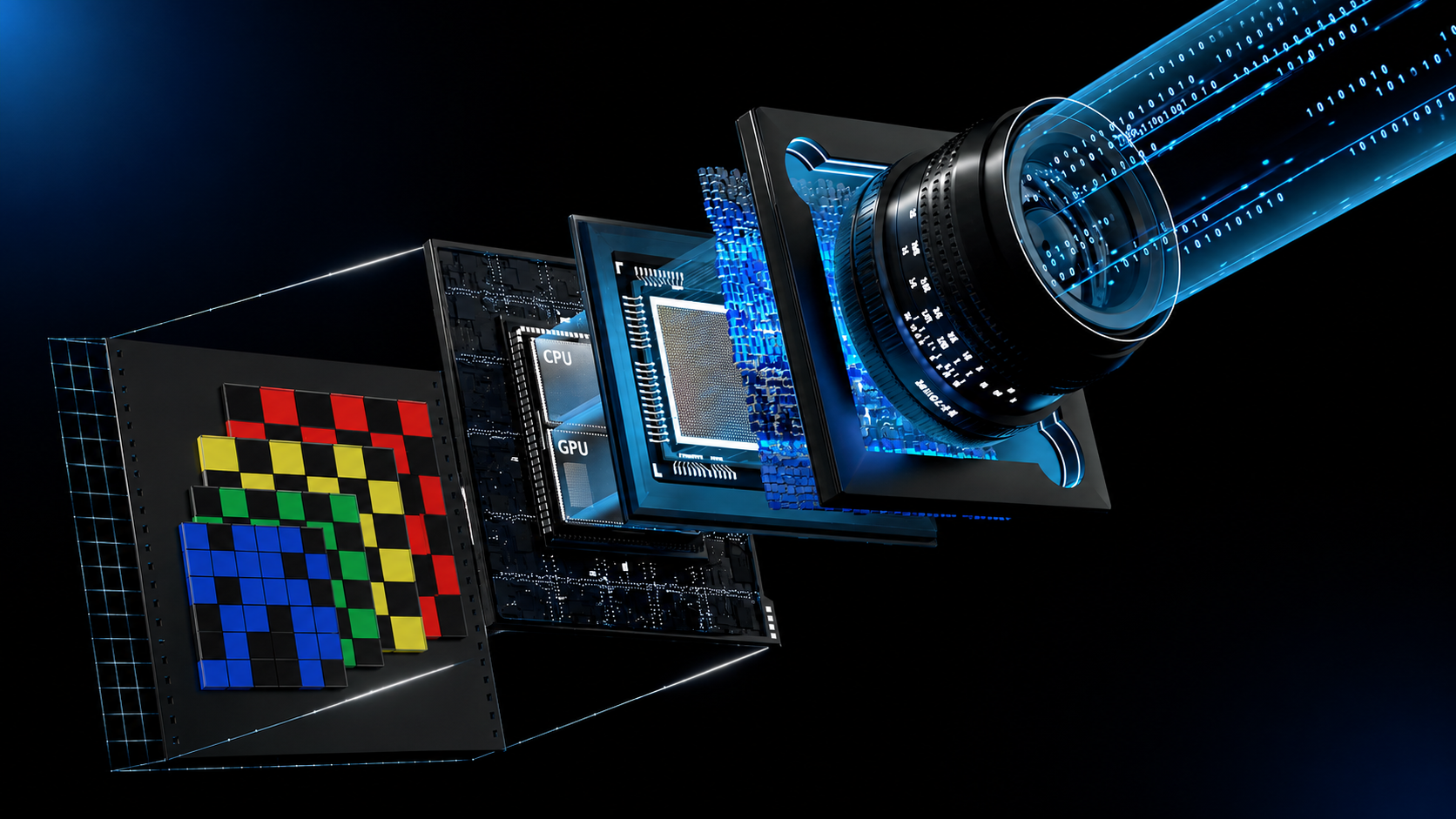
Computational Imaging combines optical design, signal processing, and computational algorithms to capture, reconstruct, and interpret visual information beyond the limits of conventional photography. Instead of producing a directly faithful image of the scene, computational imaging systems co-design capture hardware and reconstruction algorithms to extract information that would otherwise remain inaccessible, including depth, spectrum, light field, temporal dynamics, and physical properties of materials.
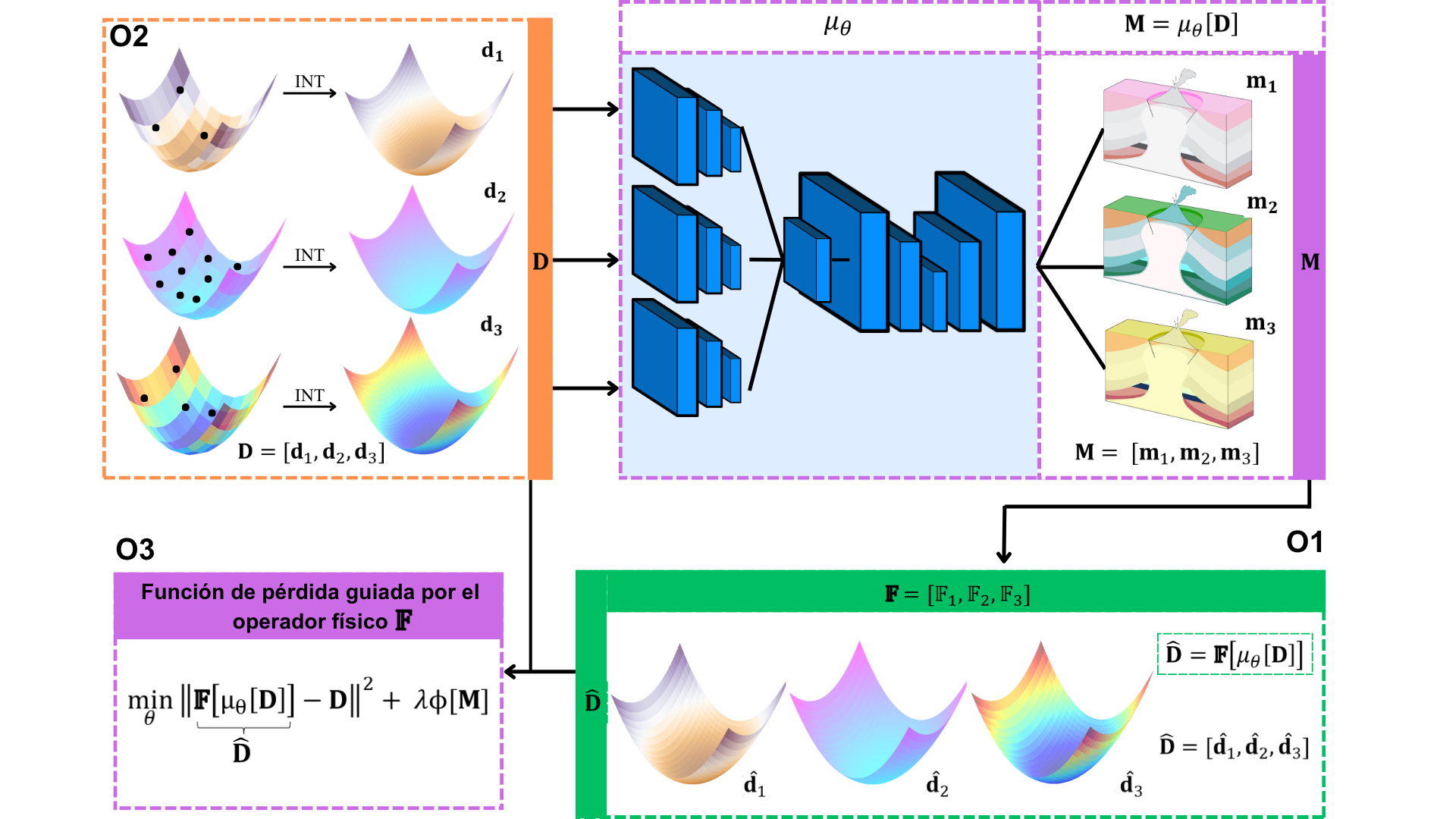
Seismic Processing and Design integrates data acquisition, physical-mathematical modeling, signal processing, and artificial intelligence to reconstruct and interpret subsurface information from indirect measurements. Instead of depending only on dense and regular acquisition geometries, this line explores computational strategies and physics-guided models that operate under sparse, irregular, or incomplete sampling. Through inversion algorithms, neural networks, and advanced reconstruction methods, it aims to image the subsurface, characterize geological structures, improve seismic interpretation, and extract relevant information from limited or complex data.
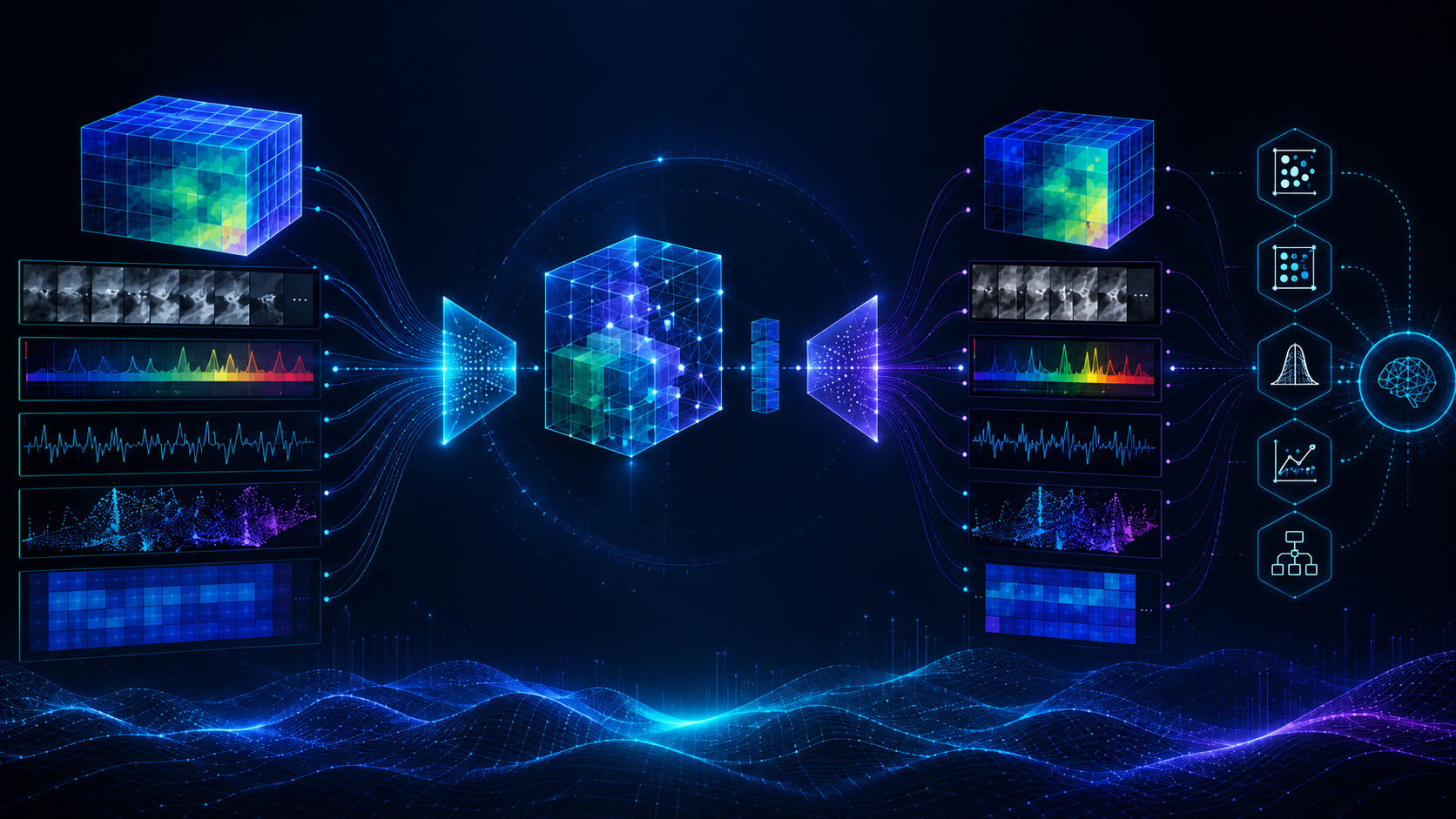
Multidimensional Data Processing combines advanced signal processing, artificial intelligence, mathematical representation, and computational algorithms to analyze, reconstruct, and interpret information contained in high-dimensional data. This line addresses complex data with multiple spatial, temporal, spectral, or structural dimensions, including images, video, signals, spectral data, and high-dimensional arrays. Its goal is to design and implement methods for representation, compression, reconstruction, and relevant information extraction, supporting classification, detection, estimation, prediction, and decision-making tasks.
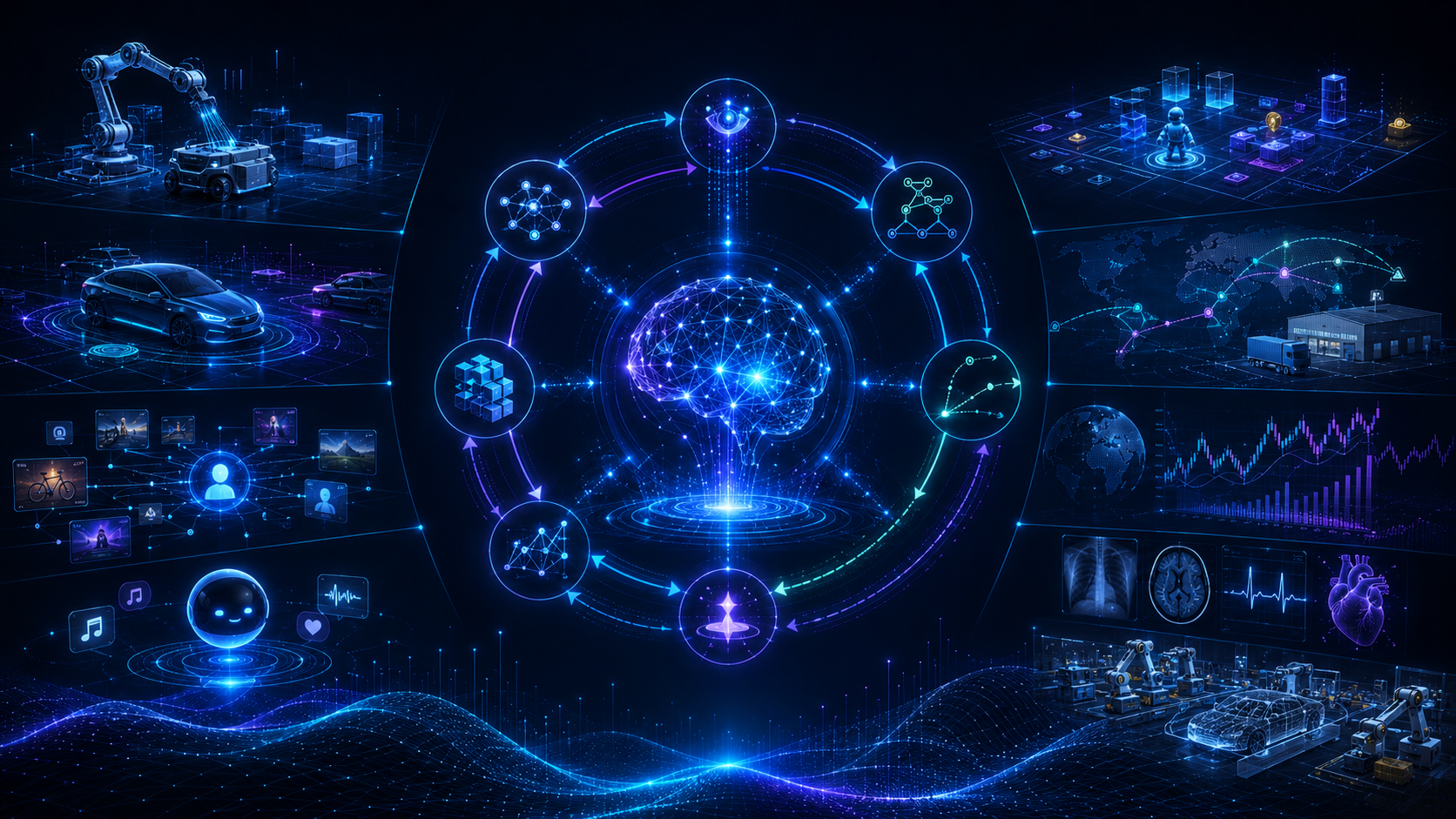
Artificial Intelligence Agents are autonomous computational systems capable of making decisions through interaction with their environment. During training, an agent observes the current state, uses a deep neural network to choose actions aligned with a long-term goal, receives a new state and a reward or penalty, and adjusts its behavior to maximize future accumulated rewards. After training, agents can predict how an environment may evolve from observations and select decisions that best serve the task. Their applications include robotics, videogames, autonomous vehicles, recommender systems, virtual assistants, and optimization models for logistics, finance, medicine, and industrial automation.
Academic reach
Collaborations and distinctions
HDSP maintains an international collaborator network that expands the reach of its research, joint projects, and scientific exchange.
The group highlights patent-oriented results that connect research with technology transfer and practical impact.
Its trajectory includes institutional recognition through UIS awards and sustained academic excellence.
Doctoral training and researcher recognition as part of the group's academic strength.